
The thing you're buying isn't a charger
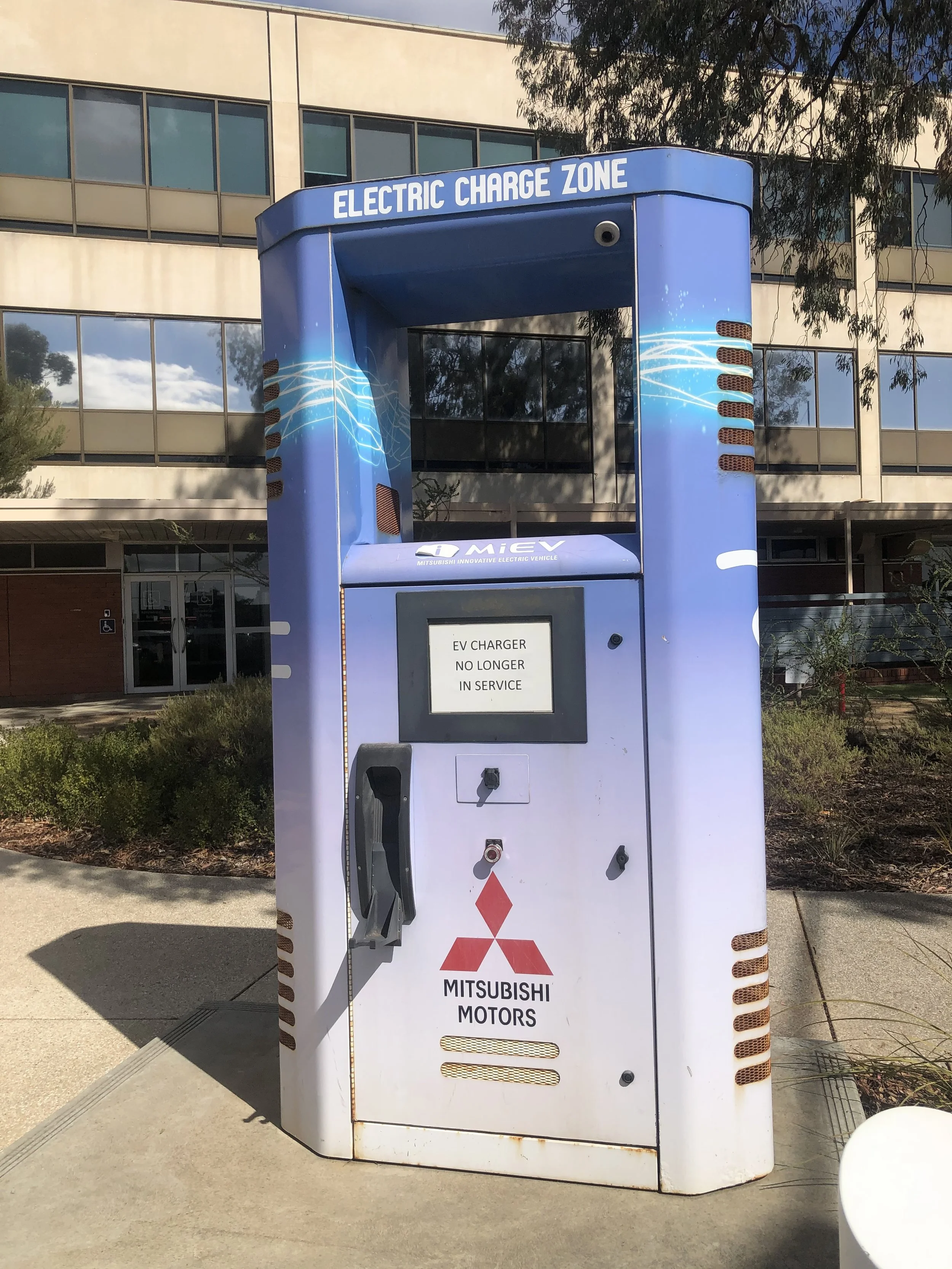
I have read more council EV charging tender documents than any reasonable person should. I cannot prove this, because no one tracks it, but I have a strong intuitive sense of being near the top of the leaderboard, which is itself one of the more depressing achievements a person can claim.
The documents are all roughly the same. They open with a stirring vision statement about decarbonisation. They include a map of the council area with little lightning-bolt icons placed approximately where the future chargers might go. And then they spend something like forty pages on the chargers themselves: their wattage, their plug types, their software protocols, the brand of the cabinet, the colour of the cabinet, occasionally (and I am not making this up) the bolt pattern on the cabinet door.
What they almost never do is mention any of the four things that decide whether the chargers will ever actually work.
I want to talk about those four things. But first, a brief defence of the people writing these documents.
Council procurement officers are, in my experience, some of the most quietly competent people in Australian public life. They are also, structurally, asked to do an impossible thing: write a tender for a category of infrastructure that did not meaningfully exist five years ago, using procurement templates designed for buying photocopiers and footpath maintenance. So when a council EV charging tender reads like it was written by someone who thinks a charger is basically a vending machine that dispenses electricity, this is not a moral failing. It is a template problem. The template thinks it is buying a thing. The thing is not a thing. The thing is a relationship.
OK. The four things.
Thing one: the wires behind the wires
Here is something almost no one outside the energy industry knows. When you install an EV charger, you do not simply plug it in. You apply, in writing, to your local electricity network company (the DNSP, which stands for Distribution Network Service Provider, and which is the kind of name you give a thing when you are actively trying to discourage people from understanding it) for permission to draw the additional power. For a simple connection, the timeline is bearable. For anything that touches the wider network — which is most kerbside projects of any meaningful size — the number of weeks is theoretically defined and practically not.
If the local transformer is full, the DNSP will tell you the upgrade will cost $180,000, give or take a hundred grand, and your three-charger project quietly becomes a transformer-upgrade project with three chargers attached.
Most council tenders do not ask the bidding operator how they handle any of this. They just sort of assume it works out. It does not always work out. This is the part of the project that fails most often, and it fails silently, because no one outside the energy industry knows to look for it.
Thing two: who owns the kerb
This sounds like a Zen koan and is, in fact, a contractual problem.
A kerb is council land, except when it isn't. A charger sits on the kerb for ten or fifteen years, which is a very long time in council-land terms. The legal instrument that lets the operator put the charger there is usually a licence or a lease, drafted from a template originally designed for, say, a coffee cart or a temporary footpath sign.
The operator needs to take this licence to a bank, which will fund the rollout. The bank will look at it for approximately eleven seconds before deciding it is not financeable. The operator will then say nothing, sign it anyway, and quietly stop bidding for new council sites. The council will later wonder why the market has gone quiet.
Thing three: the maths of a quiet kerb
Councils often ask for a revenue share. Let's say fifteen percent, which is a number that turns up in real tenders, and which sounds fair and is, in early years, structurally absurd.
A new kerbside charger in a low-EV-density suburb might do as few as four or five sessions a week. Fifteen percent of that, after the operator pays for electricity, software, maintenance, and the call centre that handles the man who has tried to wedge a Type 2 plug into a CCS port at 11pm on a Tuesday, is approximately enough money to buy the council one flat white per fortnight. This is not a commercial relationship. It is a gesture.
The right structure changes over time, and the tender should ask the operator how it should change, rather than locking in a number that suits no one in year one and only one party by year five.
Thing four: the divorce clause
What happens at the end? Who removes the charger? Who fixes the kerb? What if the operator goes broke in year four and a German pension fund inherits eleven cabinets in your high street?
These are the questions you want answered in the tender, by the people bidding on it. They are usually answered, instead, in the very last paragraph of the legal review, by a clause that has been copy-pasted from a document about photocopiers, which (and this is the heart of the whole problem) is what the template still thinks it is buying.
What to do instead
The reframe that helps, I think, is this. You are not buying a charger. You are buying a public service, delivered by a private operator, on land you control, for a period of time you have defined. Everything else, including the wattage and the plug type and the colour of the cabinet, is detail. Important detail. But detail.
If the tender is written that way, the four things above stop being missing and start being the actual content of the document. And the chargers, when they eventually arrive, are slightly more likely to be turned on.
Andrew Giannasca is the founder of AJMG Solutions, a Sydney advisory firm working with councils on transport electrification and kerbside infrastructure. He was on the founding team at JOLT Charge, Australia's first commercial EV kerbside network.
