
Nobody owns the regional charger
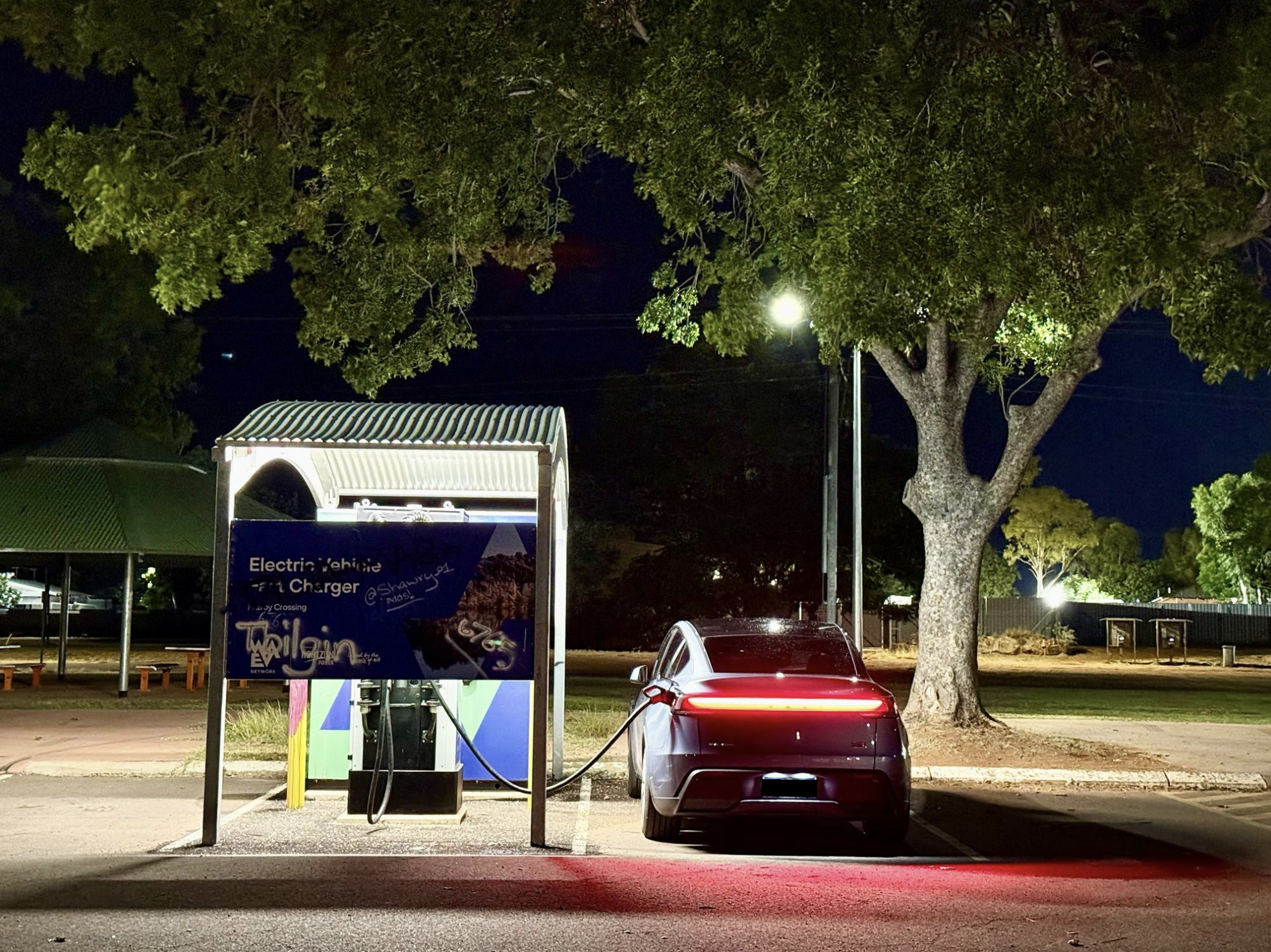
Somewhere in your council area, there is a good chance, an EV charger was installed two or three years ago. There was probably grant money involved. There was possibly a small ceremony. A mayor stood next to it. Someone took a photo. A media release went out using the word "milestone." And then, the way these things go, everyone moved on to the next milestone, and the charger was left to get on with the quiet business of being a charger.
Here is the uncomfortable question. Is it working right now?
Not "is it installed." Not "is it on the map." Is it, at this moment, capable of charging a car? Because there is a reasonable chance the answer is no, and a better-than-reasonable chance that nobody at the council would know if it were.
Let me lay out why I think that, because the numbers are genuinely a bit startling.
By one analysis last year, around one in eight public chargers in Australia is out of action at any given time, and it is worth admitting up front that the data here is thin, because nobody in this country is actually required to report it. That figure alone is worse than most people assume. But the more interesting problem is the chargers that are technically fine and still useless. The networks report uptime figures of ninety-five to ninety-eight percent, which sounds reassuring, until you learn that "uptime" measures only whether the charger is talking to the internet, not whether a human being can actually get electricity out of it. When researchers in comparable markets have measured the thing drivers actually care about, the rate at which someone pulls up and successfully charges, the real number comes back closer to seventy-five to eighty-odd percent, and there is no particular reason to think we are special. The gap between those two figures is made of blocked bays, failed handshakes between car and charger, payment systems having a moment, and the screen that says "please wait" forever. The charger is online. The charger is also, for your purposes, a large grey sculpture.
Now make it regional. A charger in a metropolitan carpark that breaks gets fixed reasonably quickly, because the part is nearby and so is the technician. A charger three hundred kilometres from the nearest spare part is a different proposition. The repair cycle stretches from hours into weeks, because the component is on a ship, or the one technician certified on that model is booked, or the diagnosis itself requires someone to physically attend. The environment does not help. Heat degrades the electronics, the mobile signal the charger needs to authorise a payment drops out, the grid connection is thinner, and at the genuinely remote sites, the local wildlife develops opinions about the cables. Regional chargers fail more and get fixed slower. Both things at once.
And the stakes of a single failure go up, not down, the further out you are. Only about a third of Australian towns have a charger within twenty kilometres. So across much of the country the charger in your town is not one option among several. It is the option. When it is down you have not inconvenienced someone, you have stranded them, and the someone is frequently a visitor who drove to your region specifically, will leave a one-star review specifically, and will mention your town by name when they tell the story at dinner.
Which brings me to the actual problem, the one underneath all the others. Nobody owns the regional charger.
I do not mean legally. Legally someone owns it, whether that is the council or the private operator that put it there on council land. I mean nobody owns the responsibility for it continuing to work. Everyone assumed someone else had that. The council assumed the operator would keep it alive, because the operator installed it and surely that is their job. The operator, depending on the contract, may have signed up to do almost nothing of the sort, because the contract was written for a capital installation and went quiet on the unglamorous decade of operation that follows. There are reliability standards now, a ninety-eight percent uptime requirement that has applied to government-funded chargers since 2024, and the machinery to monitor it is slowly being built. But it bites mostly on the newest funded chargers in the states that bothered, the enforcement is still more theory than practice, and the older installations, the ones that have been quietly degrading for years, sit almost entirely outside it. For everything beyond the funded set, reporting is voluntary, which in practice means it does not happen.
Meanwhile the council's own asset management plan, the document that is supposed to catch exactly this kind of orphan, frequently does not mention it. This is not a cheap shot. By the local government sector's own national stocktake of its assets, a third of Australian councils do not have an up-to-date asset management plan for their major assets at all, and of the councils that do, about a third never wrote down what maintaining those assets would cost. An EV charger is a small, weird, electrically complicated asset that arrived after most of those plans were written. It falls straight through the gap.
So the charger sits in a no-man's-land. Too operational to ignore. Too unglamorous to fund. Owned by everyone, maintained by no one.
The reframe I would offer regional councils is the one I offer metropolitan ones, just with higher stakes. A public charger is not a thing you install. It is a service you commit to keeping running, in public, for about ten years. The ribbon-cutting is a capital event and it is over in an afternoon. Reliability is an operating commitment that lasts the life of the asset, and the second one is what actually decides whether the project was worth doing.
None of the work that follows is glamorous. It is knowing which charging assets you actually own. It is defining what "working" means in a way that counts successful charges, not internet connectivity. It is knowing precisely who is contractually obliged to fix a fault, and how fast, and what happens to them if they don't. It is having a real number for what it costs to keep the thing alive across its whole life, and putting that number somewhere it will not be forgotten. It is deeply boring. It is also the whole game.
The good news, for what it is worth, is that this part is fixable, and cheap, relative to the cost of the charger itself and the much larger cost of a regional EV strategy that quietly fails in its third year because nobody was watching the assets from year one. It is also already being done. In South Australia, the RAA recently finished a charging network that runs effectively border to border, and the reason it works is not cleverer hardware. It works because one organisation owns, operates and maintains the whole thing, and therefore has nobody to blame but itself when a charger goes dark. That is the entire trick. Someone whose job it unambiguously is to keep the lights on.
The first step is just to go and find out whether the charger is working right now.
You may be surprised.
Andrew Giannasca is the founder of AJMG Solutions, an Australian advisory firm working with local, state and federal government agencies on transport electrification and charging infrastructure. He was on the founding team at JOLT Charge, Australia's first commercial EV kerbside network.
